Just a few minutes after checking out, a guest's 1-star review on Google can completely cause...
As AI-driven tools like ChatGPT, Gemini, Perplexity, and Google AI Overviews increasingly dominate the travel planning journey, the way travelers actively search for accommodations has fundamentally changed. The Phocuswright Travel Innovation Trends 2026 report highlights that the proportion of travelers using AI to plan trips has risen to 39%. Notably, research from SimilarWeb and Access Hospitality reveals that 35% of travelers view AI as the most useful tool during the initial discovery phase, far outstripping the 13.6% recorded for traditional search engines. In this era, AI systems extract guest review content alongside hotel management responses as core ranking signals. Join Hotel Link in exploring the AI Search-optimized review reply strategy for 2026, a solution that empowers hotels to transform every response into a positive algorithmic signal, safeguard brand reputation, and drive direct booking revenue.
The Shift in Traveler Search Behavior in 2026
The way travelers search for places to stay has entered a brand-new phase. Instead of looking up single keywords on traditional search bars, modern users tend to converse directly with AI assistants using complex prompts that integrate multiple personalized criteria at once.
The boom in generative AI platforms has made AI the first information filter in the booking journey. User behavior research shows that the Discovery Phase, the moment travelers form ideas and narrow down their options, is now heavily influenced by intent-rich search queries. If a hospitality brand fails to make AI’s initial recommendation list, the chances of reaching potential guests drop close to zero, regardless of marketing efforts or price discounts applied downstream.
To generate personalized, advisory-style answers, AI systems rely on Retrieval-Augmented Generation (RAG) technology. Rather than merely scraping raw data, RAG algorithms continuously analyze context from dynamic online sources. Among these, online review platforms (Google Reviews, TripAdvisor, Booking.com) and hotel management responses serve as Ground Truth Data. This forms the basis for AI to cross-reference, verify, and decide whether to include your brand in user recommendations.
How AI Search Algorithms Evaluate Hotel Review Replies

According to in-depth analysis published on Hospitality Net, Large Language Models (LLMs) apply Aspect-Based Sentiment Analysis (ABSA) to parse text. Hotel management responses carry significant technical weight through specific mechanisms:
1. Information Gain Principle (2026 Core Update)
Google’s core algorithm update in 2026 elevates the Information Gain signal as a top quality metric. AI prioritizes extracting and displaying content that contributes genuinely new information. A canned reply offers zero data value to AI. Conversely, a response detailing specific dish names, room locations, or corrective actions creates "fresh data" with high reference value for RAG systems.
2. Removing Negative Labels (Semantic Tagging & Status Updates)
When a guest leaves a review stating "Poor room soundproofing, very noisy at night", AI assigns a tag like Noise Level: High/Poor. However, if the hotel issues a transparent response: "The hotel completed the installation of double-glazed soundproof glass across the entire 3rd floor last week", AI Search registers this as a real-time factual update and adjusts the data status from "Unresolved Issue" to "Resolved", eliminating the risk of being filtered out of search results.
3. Ranking Thresholds
Data analysis from 2026 shows that specific score thresholds trigger positive ranking signals:
- Booking.com: A score above 8.5 unlocks the "Fabulous" classification.
- Google: An average rating of 4.5/5 or higher helps trigger priority placement in the Local Pack.
- TripAdvisor: A rating of 4.5 or higher helps qualify for the top 10% Travellers' Choice category.
The strategic operational goal for independent hotels in 2026 is maintaining an average score above 4.5/5 across all platforms, paired with a 100% response rate.
The Core Mindset Shift in Review Response Strategy for 2026
Entering 2026, the rise of AI Search engines has completely transformed the nature of online review replies. While responses were previously treated as a procedural customer service task to close out past guest experiences, every management reply today functions as an input data update for search algorithms. This shift requires hotels to evolve their operational mindset from the ground up:
- Core Goal Shift: Rather than politely saying thank you to "close" an incident, the new objective is providing factual, contextual data (Information Gain) for AI algorithms to scrape and analyze.
- Optimized Response Time: Instead of delaying replies by 5–7 days, operational standards require maintaining a 24-hour "golden window" for general reviews and 6–12 hours for negative feedback.
- Personalization Over Templates: Eliminate generic canned responses completely. Every reply must address the guest by name and speak directly to specific solutions using practical keywords.
- Algorithmic Impact: Move beyond simply influencing the reader's perception to actively improving the hotel's Sentiment Score and semantic tagging on AI Search tools.
6 Principles to Build an AI Search-Optimized Response Strategy
To turn review responses into a next-generation SEO tool, hotel managers should apply six standardized operational principles:
1. Meet the 6–24 Hour "Golden Window"
2026 operational standards require responding to all reviews within 24 hours. For negative feedback in particular, processing time should be shortened to 6 to 12 hours to demonstrate responsiveness while preventing negative data tags from sitting isolated when AI bots crawl the system.
2. Eliminate Canned Responses Entirely
Large Language Models such as GPT-4o, Gemini, or Perplexity are highly adept at detecting repetitive text. Repeating a generic template will be classified by AI as "Low-value Content". Address the guest by name and reference specific details from their experience.
3. Detail Specific Solutions to Generate Information Gain
When responding to negative feedback, use the formula: Acknowledge + Practical Solution with Timeline.
- AI-Optimized Example: "The hotel added 15 vegan options to our breakfast buffet and replaced all automatic coffee machines in the restaurant starting April 10th."
- Impact: AI Search extracts keywords like "vegan breakfast buffet" and "new coffee machines" to feed recommendation lists for users searching for those criteria.
4. Integrate Brand Keywords and Unique Amenities
Naturally weave keywords about your location and signature amenities into positive replies to reinforce the semantic association between your brand and services within AI vector spaces.
- Example: "We are thrilled that you enjoyed our ocean-facing infinity pool and complimentary afternoon tea service at [Hotel Name]!"
5. Maintain Multi-Channel Information Consistency
Data across Google Business Profile, TripAdvisor, Agoda, Booking.com, and social media channels must be aligned. Multi-channel data standardization helps AI build an authentic profile and verify your brand reputation when synthesizing answers.
6. Handle Complaints Professionally and Avoid Defensiveness
Avoid confrontational arguments online. Heated or passive-defensive replies create Negative Sentiment Data that AI picks up and categorizes as high operational risk.
Read more: Turning Guest Complaints Into Long-Term Loyalty in the AI-Search Era
Centralized Review Management and Speed Optimization with Hotel Link
An analysis of 161,000 AI search queries revealed that only 3.8% of data sources were cited across all four major systems (ChatGPT, Gemini, Perplexity, Google AI Overviews). This proves that no single platform holds absolute dominance, requiring hotels to maintain a consistent response presence across all online booking channels.
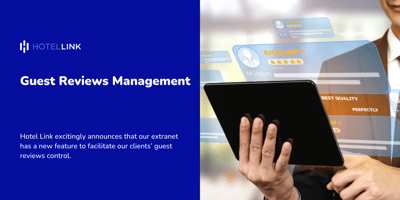
Managing a high volume of reviews manually creates a heavy operational burden. Addressing this challenge, Hotel Link integrates the OTA Reviews feature within its comprehensive hotel management ecosystem:
- Centralized Review Data: Automatically aggregates all reviews from major OTAs, including Booking.com, Airbnb, Expedia,... into a single management dashboard, helping operational teams oversee online reputation effortlessly.
- Real-Time Score Tracking & Timely Replies: Enables management to track score fluctuations in real time, proactively categorize reviews, and respond quickly to negative feedback to protect brand thresholds.
- Optimized Operational Workflows: Allows staff to monitor, draft, and manage response statuses centrally in one place, reducing complex manual steps and ensuring consistent response times.
Read more: Building Monthly Operating Rhythm From Guest Review Data For Hotels
Conclusion
The year 2026 marks a crucial turning point: online review responses are no longer just a measure of customer service goodwill, but direct input data determining a hotel's visibility on AI Search engines. However, excellence in review management is only one piece of the broader operational puzzle. To truly boost competitiveness, protect profit margins, and drive direct bookings, independent hotels need a synchronized management strategy, seamlessly connecting guest stay experiences, channel management, and multi-platform reputation care.
Let Hotel Link accompany your hotel in elevating guest experiences and optimizing business performance through our comprehensive ecosystem of hotel management solutions.
Contact the Hotel Link team today for a consultation on your OTA review management strategy and experience our complete hotel tech platform!